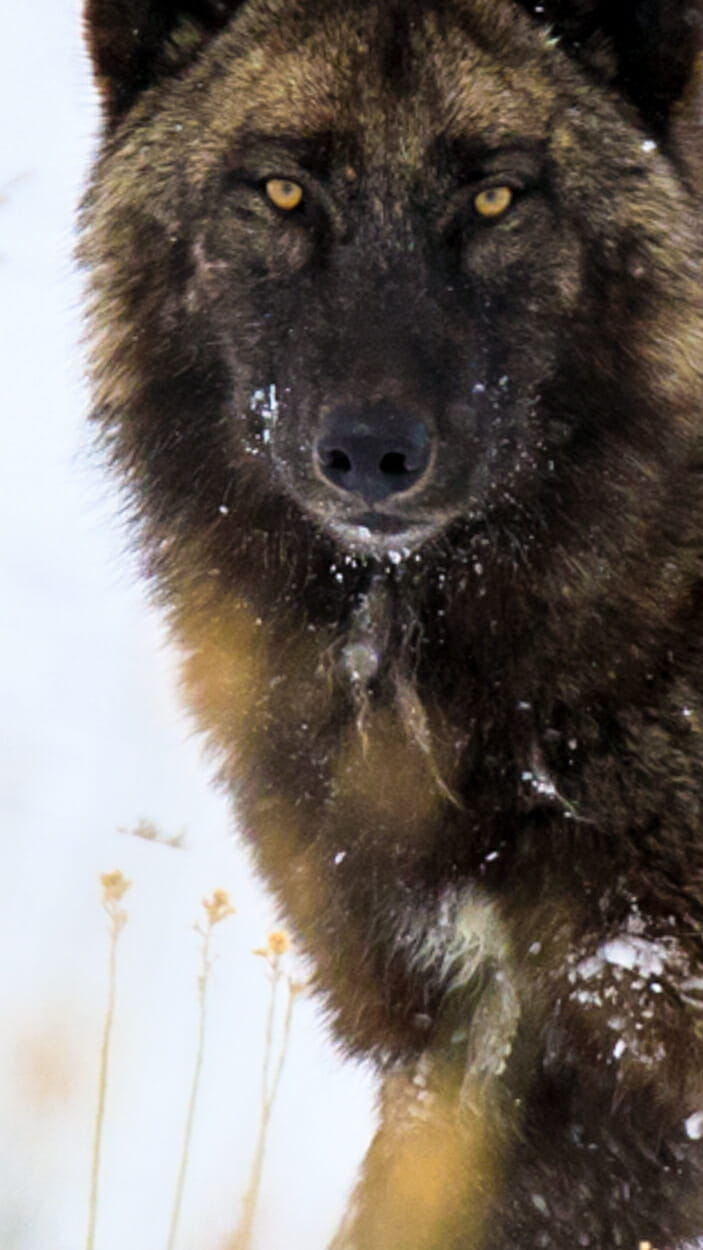
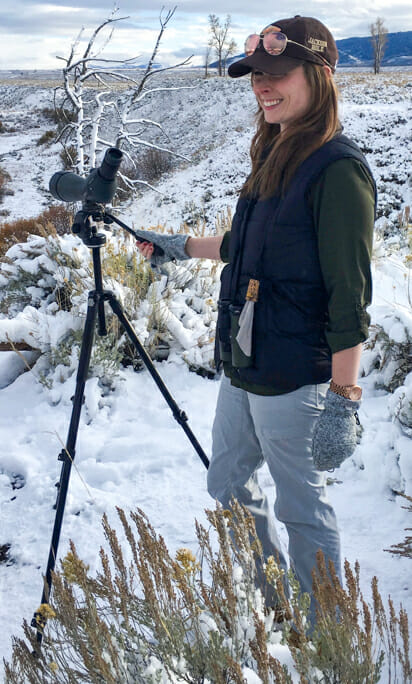
Every winter, Jackson Hole’s wolves follow the elk, and the elk come down to the valley floor. That one pattern explains almost everything about where, when, and how to look for them.
The best way to see wolves in Jackson Hole is with a naturalist guide in winter, December through March, when elk gather on the National Elk Refuge and in Grand Teton’s valleys and wolves follow them. For the best odds, add Yellowstone’s Lamar Valley on a multi-day trip. Sightings are never guaranteed.


Can You Actually See Wolves in Jackson Hole?
Yes, though they’re never easy to find. According to Grand Teton National Park’s wolf monitoring program, at least 46 wolves in six packs had home ranges that included the park at the end of 2024. The packs include Lower Gros Ventre, Horsetail Creek, and Blacktail Butte.
Wolves range widely, keep their distance from people, and are most active around dawn and dusk. A sighting in the valley usually comes down to timing, good optics, and knowing what the elk are doing that week.

Why Winter Is the Best Season for Wolf Watching
Summer spreads wildlife across the high country. Winter pulls it together. Here’s why the cold months give you the best chance:
- Prey is concentrated. Thousands of elk winter on the National Elk Refuge and in the surrounding valleys, and predators follow.
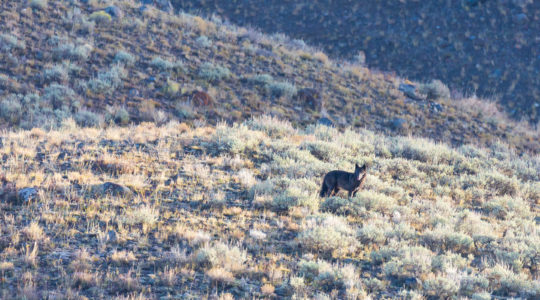
- Snow gives contrast. A dark wolf crossing a white sage flat is visible from far away, and fresh tracks show guides where a pack has been moving.
- It’s breeding season. January and February are the wolves’ mating months, which tends to mean more travel and more howling.
- Bears are asleep. With grizzlies in their dens, winter safaris can focus on wolves, coyotes, foxes, and the big grazers.

Where to Look for Wolves
On the Jackson Hole valley floor
Watch the open country near wintering elk. That includes the edges of the National Elk Refuge, the Gros Ventre River corridor and Antelope Flats, and Elk Ranch Flats near Moran. Packs move through these areas rather than staying in one spot, so a guide’s knowledge of recent activity matters more than any single pullout.
In Yellowstone’s Lamar Valley
Lamar Valley, on Yellowstone’s Northern Range, is the region’s most reliable wolf-watching landscape. The catch is winter access. Most of Yellowstone’s roads close to regular vehicles, so reaching Lamar from Jackson means looping around through Montana and staying overnight near the North Entrance in Gardiner. A day trip doesn’t really work.

3 Day Winter Wolves and Wildlife Safari
If wolves are the reason for your trip, the 3-Day Winter Wolves and Wildlife Safari is the itinerary built around them. It’s private, capped at six guests, and runs December through April.
- Day 1: search Grand Teton and the National Elk Refuge, then cross Teton Pass (weather permitting) to West Yellowstone, Montana.
- Day 2: add an optional snowcoach or snowmobile trip into Yellowstone’s interior (booked in advance, extra cost) or snowshoe and look for wildlife. Stop at the Grizzly & Wolf Discovery Center, then continue to Gardiner.
- Day 3: be in Lamar Valley at first light, when wolves are most active, and return to your Jackson lodging by dinnertime.
Lodging, meals, park fees, optics, and gratuities are included. It isn’t a guarantee, but it puts you where Greater Yellowstone’s wolves are most often seen, at the hour they’re most often seen there.


Snowcoach and Snowmobile Tours with Greater Yellowstone Tours
Jackson H0le Wildlife Safari’s sister company, Greater Yellowstone Tours, offers over-snow tours into the south entrance of Yellowstone from Jackson Hole. Since you cannot drive yourself into the park between December and April, this is the way to see Yellowstone in a single day with a chance at spotting wolves.

Best of Jackson Hole Wildlife Safari (with Elk Refuge sleigh ride)
This full-day, roughly 8-hour private safari covers the National Elk Refuge and Grand Teton National Park. Your guide drives while you scan the valley for elk, bison, moose, bighorn sheep, coyotes, foxes, and, with some luck, wolves moving through the snow.
During the day, your group will stop at the Elk Refuge and hop on a horse-drawn sleigh that takes you out into the refuge and amongst the elk herds. The elk don’t spook at the horses, so you can get excellent close-up views of them and any other wildlife that may be around- including wolves!


How to Choose: A 6-Step Decision List
- Rank your goal. If wolves are the top priority, plan for Lamar Valley. If you want a well-rounded winter wildlife day, stay in the valley.
- Count your days. One open day points to the Best of Jackson Hole safari. Three days opens up the multi-day trip.
- Check your dates. The sleigh ride runs December through March. Snowcoach access to Old Faithful generally runs mid-December to mid-March.
- Plan for dawn. Wolves are most active early. Winter pickups start around 7:00 AM for a reason.
- Choose expertise and optics. At wolf-viewing distances, a quality spotting scope and a guide who reads tracks make the difference.
- Book early. Multi-day lodging in Gardiner and West Yellowstone is confirmed after your tour is reserved, and winter dates fill.

Wolf-Watching Etiquette in Grand Teton
Grand Teton National Park requires visitors to stay at least 100 yards from wolves and bears, and at least 25 yards from all other wildlife, including when you’re in a vehicle. If an animal changes its behavior because of you, you’re too close.
Use scopes instead of trying to get closer. Respect winter wildlife closures. Keep your voice down when a pack is in view. As Jackson Hole Wildlife Safaris naturalist Lee Ramella told Diablo magazine, “Nobody gets bored with wolves.” The best way to keep it that way is to give them room.


Plan Your Winter Wolf Trip
The wolves of Greater Yellowstone don’t keep a schedule, but winter gives you the best chance of seeing them. Spend a day on the valley floor with a sleigh ride through the elk herd, give yourself three days and greet the sunrise in Lamar Valley, or hop in a cozy snowcoach or on an adventurous snowmobile tour into Yellowstone.
Explore the 3 Day Winter Wolves and Wildlife Safari → Spend a day on the Best of Jackson Hole Wildlife Safari → Take a snowcoach or snownmobile tour to Yellowstone
FAQs
Can you see wolves in Jackson Hole?
Yes. Grand Teton National Park reports several packs with home ranges in the park at the end of 2024. Wolves are wary and wide-ranging, so sightings are never guaranteed. Your best chances come in winter, at dawn, and with a naturalist guide who tracks recent pack activity and carries a spotting scope.
What is the best month to see wolves near Jackson Hole?
January and February are usually the strongest months. Elk are concentrated on their winter range, snow makes dark wolves easy to pick out, and it’s the wolves’ breeding season, which means more movement and howling. December and March can also be productive, especially early in the morning.
Will I see wolves on the National Elk Refuge sleigh ride?
It’s possible, but don’t count on it. The sleigh ride takes you into the refuge’s wintering elk herd, often thousands of animals, and wolves sometimes hunt along the refuge’s edges. Jackson Hole Wildlife Safaris pairs the sleigh ride with a full day of guided wildlife viewing on its Best of Jackson Hole safari, which improves your overall odds.
Can you get to Lamar Valley from Jackson Hole in winter?
Yes, but not as a simple day trip. Most Yellowstone roads close to regular vehicles in winter, so reaching Lamar Valley from Jackson means traveling around through Montana and staying near Gardiner. The 3 Day Winter Wolves and Wildlife Safari handles that route and puts you in Lamar at first light.
How close can you get to wolves in Grand Teton National Park?
You must stay at least 100 yards from wolves and bears, and at least 25 yards from all other wildlife, whether you’re on foot or in a vehicle. Bring binoculars or a spotting scope for a closer view. Guided safaris provide high-quality optics, so you can watch natural behavior without disturbing the animals.