

Ambystoma tigrinum
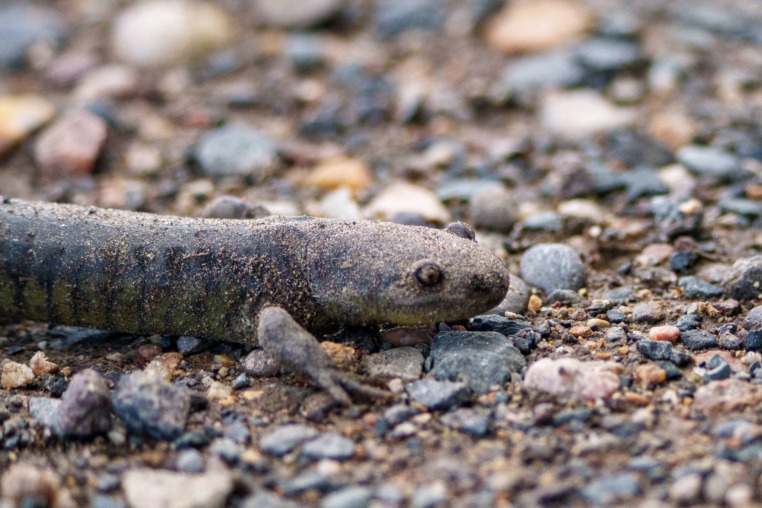
Tiger salamanders are one of Yellowstone’s most fascinating amphibians, spending much of their lives hidden beneath soil, rocks, and vegetation. Adults can grow nearly a foot long and are recognized by their stout bodies, broad heads, and yellow or olive markings against a dark background. Their moist skin helps them breathe and keeps them closely connected to wet environments.
Wildlife Viewing
- Yellowstone
- Grand Teton
- Jackson Hole
Book Online
Watch For Wildlife On These Tours


About
Yellowstone’s Hidden Amphibian
Tiger salamanders spend much of their adult lives underground, sheltering in abandoned rodent burrows, beneath logs, and in loose soil. They emerge most often at night or after rain and become especially active around ponds and wetlands during Yellowstone’s short summer.
Life Between Land and Water
Tiger salamanders depend on both land and water throughout their lives. In spring and early summer, adults travel to ponds, lakes, and seasonal wetlands to breed. Females lay hundreds of eggs, often attaching them to underwater vegetation.
Young salamanders begin life as aquatic larvae, breathing through feathery external gills. They feed on small aquatic organisms before eventually developing into adults that leave the water. Salamanders also play an important role in the food web, eating insects and other invertebrates while providing food for birds, fish, and other wildlife.
Built for Yellowstone’s Extremes
Long winters and a short growing season make life challenging for amphibians in Yellowstone. Tiger salamanders survive the cold months underground, where they are protected from the harshest temperatures.
When snow melts and temperatures rise, they emerge and take advantage of seasonal ponds and wetlands. These temporary waters can provide valuable breeding habitat, particularly where fish are absent and salamander eggs and larvae are less vulnerable to predators.
Where Can I See Tiger Salamanders
Tiger salamanders can be found around suitable ponds, shallow lakes, wet meadows, and other wetlands throughout Yellowstone. Spring and early summer are the best times to look, especially after rain when adults may travel across wet ground toward breeding ponds.
Their eggs and larvae can sometimes be easier to spot than the adults. Look for egg clusters attached to underwater vegetation or small larvae moving through shallow water. Avoid handling salamanders or disturbing breeding ponds.
Tiger salamanders may not have the size of a bison or the presence of a grizzly bear, but they are an important part of Yellowstone’s ecosystem. Hidden beneath the surface for much of their lives, they connect the park’s wetlands, forests, and seasonal waters — reminding us that some of Yellowstone’s most fascinating wildlife is easy to overlook.

FAQs
Are tiger salamanders found in Yellowstone?
Yes. Tiger salamanders are found throughout suitable wetland habitats in Yellowstone, including ponds, lakes, and wet meadows.
When is the best time to see tiger salamanders?
Spring and early summer are the best times to look, particularly after rain. Salamanders are most active at night and may be seen traveling toward breeding ponds.
Where do tiger salamanders live?
Tiger salamanders spend much of their lives underground, often sheltering in rodent burrows, beneath logs, or in loose soil. They return to ponds and wetlands to breed.
What do tiger salamanders eat?
They eat a variety of small animals, including insects, worms, spiders, and other invertebrates. Their aquatic larvae also feed on small organisms in ponds.
Can I pick up a tiger salamander?
It is best to observe tiger salamanders without touching them. Their skin is sensitive, and handling can damage their protective moisture barrier. Give them plenty of space and avoid disturbing their breeding habitat.
Further Reading
Jackson Hole Wildlife
Jul 12, 2024
Thanks to the range of different habitats that scatter across the sprawling valley, there is a plethora of wildlife to be found. The forests house woodland creatures like foxes, mule deer, black bears, pine martens, and elk.
A Month by Month Guide to Grand Teton National Park
Jun 21, 2024
Each and every month has something special to note, meaning that no matter what season you visit will be a special time. Use this guide to determine what time of year aligns best with what your interests and goals are.