
Search
Jackson Hole
Wildlife
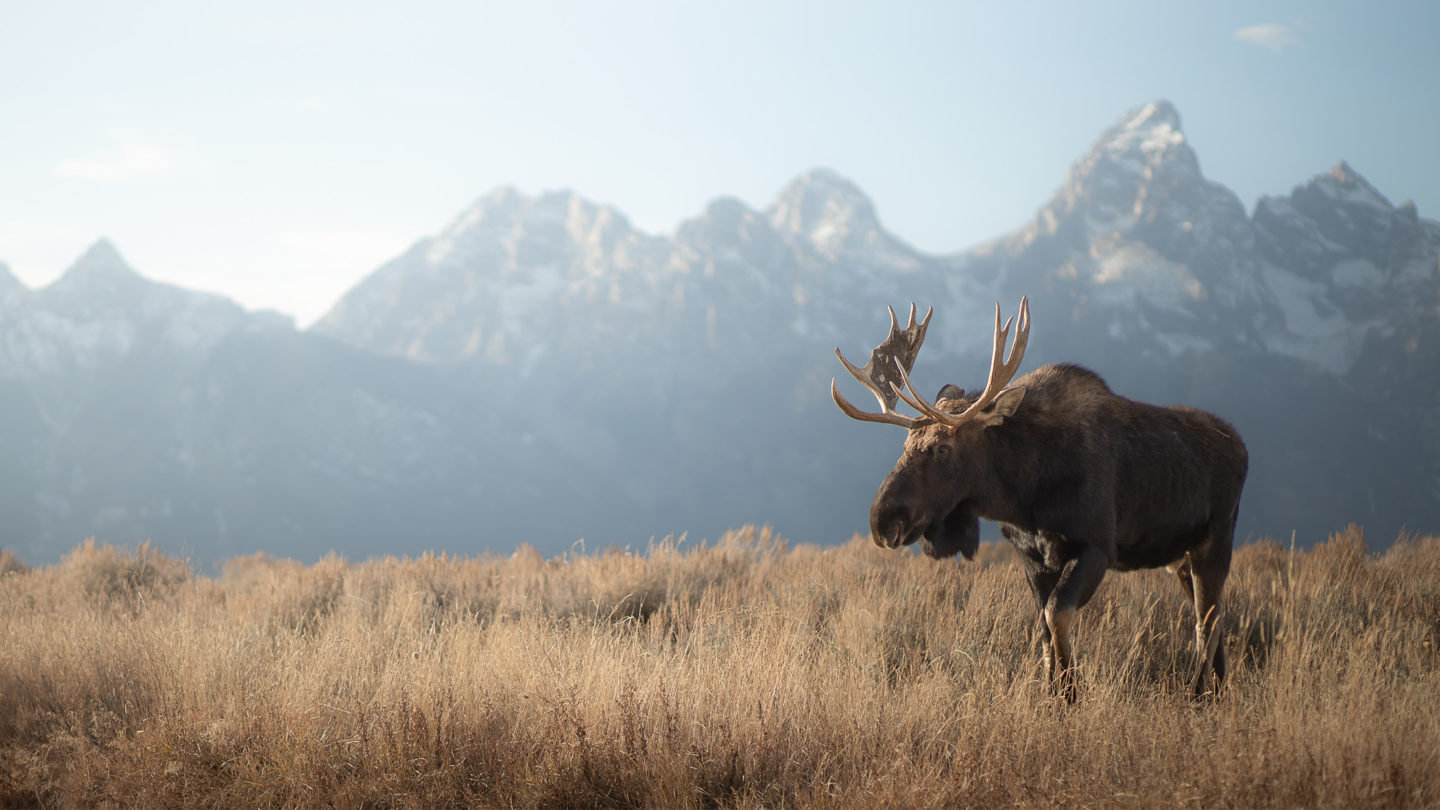
The Greater Yellowstone Ecosystem (GYE) is one of the largest nearly intact temperate ecosystems on Earth, covering 22 million acres across and beyond Yellowstone and Grand Teton National Parks. Recognized worldwide as a model of conservation, this region has remained protected since Yellowstone became the first national park in 1872 and expanded with the creation of Grand Teton National Park in 1950. Visitors today experience an interconnected wilderness of mountains, valleys, rivers, and meadows that still functions as a complete ecosystem, home to the same wildlife species that roamed the West centuries ago.
If you’re wondering what animals live in the Greater Yellowstone Ecosystem, the answer is – a lot of them! The diversity of habitats supports an incredible range of species. On open sagebrush plains, travelers may encounter bison, pronghorn antelope, grizzly bears, coyotes, hawks, and sandhill cranes. Forested areas provide cover for elk, mule deer, black bears, pine martens, and foxes, while the region’s lakes and rivers attract beavers, river otters, swans, pelicans, bald eagles, and moose. Even the steepest cliffs and rocky slopes hold specialized wildlife like bighorn sheep, mountain goats, and pika, showcasing the adaptability of animals in Yellowstone National Park and Grand Teton National Park.
Large carnivores are among the most iconic species of the Yellowstone ecosystem. The gray wolf, once eliminated from the region, was reintroduced to Yellowstone National Park in 1995, creating one of the most successful wildlife recovery stories in North America. Today, Yellowstone supports more than 100 wolves in about 10 packs, and visitors often ask, “Can you see wolves in Yellowstone?” The answer is yes: Yellowstone remains one of the best places in the world to watch wild wolves, alongside grizzly bears, black bears, and elusive mountain lions that thrive in this protected ecosystem.
Another unforgettable highlight of Yellowstone and Grand Teton wildlife is the elk rut, which takes place each fall. The Rocky Mountain Elk, one of the largest deer species in North America, migrate through the parks in vast herds. During September and October, bull elk can be heard bugling across valleys and meadows, defending harems of females in one of the most dramatic wildlife spectacles of the year. For travelers searching the best time to visit Jackson Hole for wildlife, autumn is unmatched, offering the chance to witness the elk rut against the backdrop of the Teton Range while also spotting bison, moose, and migrating birds.


FAQs
When is the best time of year for a wildlife expedition in Jackson Hole?
Wildlife viewing in Jackson Hole is exceptional year-round, with each season offering distinct opportunities. Summer brings abundant activity across higher elevations, while fall is known for the elk rut and increased predator movement. Winter provides some of the most concentrated wildlife viewing as animals gather in valley habitats, and spring offers dynamic behavior as species emerge, migrate, and raise young.
Are wildlife expeditions in Jackson Hole safe for families with children?
Yes, wildlife expeditions in Jackson Hole are well-suited for families when guided by experienced naturalists. Professional guides prioritize safety, maintain proper wildlife viewing distances, and adapt the pace of the tour to accommodate all ages. With comfortable vehicles, educational interpretation, and structured itineraries, these experiences are both safe and engaging for children and adults alike.
Where are the best places to see wildlife in the Greater Yellowstone Ecosystem?
The Greater Yellowstone Ecosystem offers some of North America’s most productive wildlife habitat, with standout areas including Grand Teton National Park, Yellowstone National Park, and the National Elk Refuge. Within these regions, locations such as river corridors, sagebrush valleys, and open meadows provide prime viewing conditions. Jackson Hole serves as an ideal basecamp, offering immediate access to these diverse ecosystems and their resident wildlife.
When do major wildlife migrations happen in Jackson Hole?
Major wildlife migrations in Jackson Hole occur primarily in spring and fall as animals move between seasonal ranges. In spring, elk, mule deer, and pronghorn follow melting snow and emerging vegetation to higher elevations in Grand Teton and Yellowstone. In fall, colder temperatures and snowfall trigger movement back toward lower valleys, with large elk herds often gathering in and around Jackson Hole before winter. For more information on elk migrations and their fall rut, visit our blog: https://jacksonholewildlifesafaris.com/elk-rut-mating-season-in-the-greater-yellowstone-ecosystem/
How can I view wildlife responsibly during my visit?
Responsible wildlife viewing begins with maintaining safe distances, remaining in or near your vehicle when appropriate, and never approaching or feeding animals. Ethical viewing protects both wildlife and visitors while preserving natural behaviors. Guided wildlife safaris further support responsible practices by positioning guests safely, minimizing disturbance, and providing education on conservation and ecosystem stewardship. To learn more about how we practice Leave No Trace, read here: https://jacksonholewildlifesafaris.com/leave-no-trace-and-responsible-tourism/