Masters of the Winter Landscape
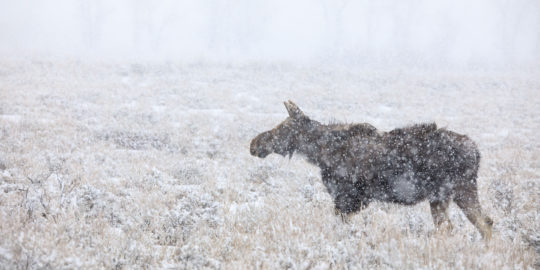
Winter settles over Jackson Hole with deep snow, frozen rivers, and quiet stands of cottonwoods. Moving calmly through this frozen world is one of the region’s most impressive animals: the moose. Tall, powerful, and deliberate, moose are a striking presence during the coldest months of the year.
Moose are not only icons of the American West. They are also a northern species that is found across much of the globe. Populations extend through Canada, Alaska, Scandinavia, Siberia, and many other boreal regions. Their ability to thrive in winter is one of the traits that allows them to span such a wide geographic range.
Guests who travel with Jackson Hole Wildlife Safaris often see moose feeding on willows along icy streams or resting in sheltered winter habitat. Their steady movements and impressive size make them one of the most memorable wildlife sightings in the Greater Yellowstone Ecosystem.

Perfectly Built for Bitter Cold
Moose have evolved a suite of adaptations that allow them to excel in cold climates. Their long legs lift them above deep snow and give them access to shrubs and branches that remain available in winter. Their dense winter coats contain hollow guard hairs that trap warm air close to the body. This natural insulation helps moose conserve heat even in temperatures well below zero.
A thick layer of skin and stored fat provides additional protection. During the fall, moose build up these reserves to prepare for months of scarce food and constant cold. Their large size helps retain heat, which is one reason they are so successful in northern regions throughout the world.
Moose have large muzzles and flexible upper lips that allow them to strip bark and browse twigs with precision. This feeding style is especially important in winter when most vegetation is buried under snow and only woody plants remain available.

Saving Energy During the Harshest Months
Life in winter requires careful energy management. Food is limited, the snowpack is deep, and storms can last for days. Moose conserve energy by slowing their movements and traveling only when necessary. They often remain in small winter ranges where willows and shrubs are easy to reach.
During severe weather, moose may rest for long periods in sheltered pockets of forest. This behavior helps them preserve calories until conditions improve. When they do travel, they often follow existing paths created by other animals or their own previous routes. Using established trails requires far less effort than breaking through untouched snow.
These energy saving strategies become essential as late winter approaches and fat reserves begin to decline.


Independent Winter Survivors
Moose differ from many ungulates because they do not gather in large herds. They prefer a solitary lifestyle, especially once the fall rut ends. Bulls separate into their own winter territories while cows stay with their calves until early summer.
Their preferred winter habitat includes low elevation wetlands, river bottoms, and willow flats where the snowpack is thinner and nutritious shrubs remain exposed. In Jackson Hole, moose commonly spend winter along the Snake River corridor, the Moose Wilson Road area, and throughout the cottonwood forests of Grand Teton National Park.
Although moose avoid conflict when possible, they are capable defenders. Their long legs and sharp hooves allow them to strike with surprising speed and strength. This defense is especially important for cows that are protecting young calves.

Spring Recovery After a Long Winter
By the end of winter, moose may appear leaner after months of limited forage. As spring arrives and fresh buds emerge, they quickly regain body condition. New growth along streams and wetlands provides the nutrients they need to recover from the winter season.
Calving usually occurs in late May or early June. Cows choose secluded willow thickets to give birth to one or two calves. The calves stand and nurse within hours and follow their mothers through the landscape soon after. This early mobility helps them avoid predators and learn essential survival skills.
The return of young calves signals the start of a new season in the Greater Yellowstone Ecosystem. It is also a reminder of the incredible resilience that allows moose to survive in some of the harshest climates in the world.


A Timeless Symbol of the Northern Wilderness
Moose have adapted to life in northern environments across the globe. Their range stretches from the Rocky Mountains to Scandinavia and from Alaska to Siberia. This global distribution reflects their remarkable ability to endure long seasons of snow and cold. In Jackson Hole, seeing a moose against a snowy backdrop is a classic winter moment. Their size, strength, and calm presence define the spirit of winter in the Tetons.
While many animals migrate or lie dormant during the coldest months, moose remain active all year. Their winter presence is a testament to their toughness and their long history as a northern species.

FAQs
How do moose stay warm during winter in Jackson Hole?
Moose rely on thick winter coats with hollow guard hairs, dense undercoats, large bodies that retain heat, and stored fat reserves. Their slow movements during storms help conserve energy and maintain body temperature.
Where are the best places to see moose in winter?
Moose gather in low elevation areas that offer shrubs and willows. The Snake River floodplain, the Moose Wilson corridor, and cottonwood forests in Grand Teton National Park are common winter habitats. Guided tours help visitors view moose safely and respectfully.
What do moose eat when snow covers the ground?
Moose browse woody vegetation such as willow, cottonwood, aspen, and sagebrush. They use their flexible upper lips to strip bark and twigs when other plants are buried beneath snow.
Are moose dangerous?
Moose can be unpredictable and may charge if they feel threatened, especially cows with calves. It is important to maintain a safe viewing distance and avoid approaching them. Professional guides help ensure safe encounters.
Why are moose considered a northern species?
Moose are found throughout northern regions of the world including Canada, Alaska, Scandinavia, and Siberia. Their adaptations allow them to thrive in cold climates with deep snow and long winters. The same traits that help them survive in northern Europe and Asia also support their success in the Greater Yellowstone Ecosystem.