Icons of the Winter Landscape
Elk are found across large swaths of the northern world, particularly in North America and parts of Asia where cold winters define the landscape. Their ability to adapt to winter conditions has allowed them to persist across diverse northern habitats for thousands of years.
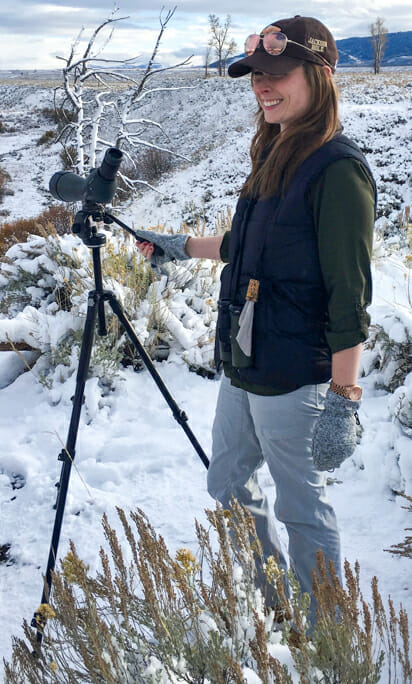
Guests who travel with Jackson Hole Wildlife Safaris regularly spot elk gathered in open sagebrush flats, clustered in sheltered timber, or resting along the valley floor. These winter sightings offer a glimpse into the resilience and endurance of one of the West’s most iconic species.

Tricks to Stay Warm
Elk possess several physical traits that support their survival through long winters. Their thick winter coats consist of two layers. The longer outer hairs repel snow and moisture, while the dense undercoat traps warm air close to the body. This natural insulation keeps elk warm even during intense cold snaps.
Throughout autumn, elk build up fat reserves that help sustain them throughout the winter months. Their large bodies retain heat efficiently, and their long, strong legs allow them to navigate deep snow while still accessing important food sources.
Elk rely on a diet of dried grasses, shrubs, and woody plants during winter. Their specialized digestive system helps them extract nutrients from low quality forage, a critical advantage during the months when fresh vegetation is unavailable.

Conserving Energy in a Demanding Season
Winter is a season of scarcity, and elk respond by adjusting their behavior to preserve as much energy as possible. Elk reduce unnecessary movement, limit long distance travel, and choose winter ranges where shelter and food are within easy reach.
During periods of extreme cold or heavy snowfall, elk may rest for long stretches in protected areas, conserving body heat and avoiding energy loss. They often use well established trails that require less effort to navigate compared to breaking fresh paths through deep snow.
These strategies help elk conserve the calories needed to survive until spring brings fresh vegetation back to the valley floor.


Herding Together for Winter Survival
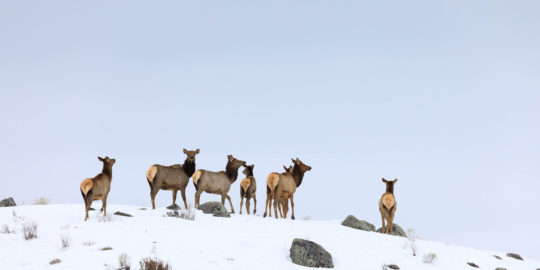
Unlike solitary moose, elk are highly social. Winter brings large herds together, sometimes numbering in the hundreds. Group living provides several advantages including increased protection from predators and greater efficiency when traveling through deep snow.
Elk migrate seasonally to take advantage of more favorable winter conditions. In Jackson Hole, many herds move from higher elevations to the valley floor where snow is typically shallower and vegetation remains more accessible. Well known wintering areas include the National Elk Refuge, the sagebrush flats along the Gros Ventre River, and open habitat near Grand Teton National Park.
The presence of wolves and mountain lions adds pressure during the winter months. Herding behavior helps elk detect danger more quickly and reduces the likelihood of predation on individuals.
The Transition to Spring
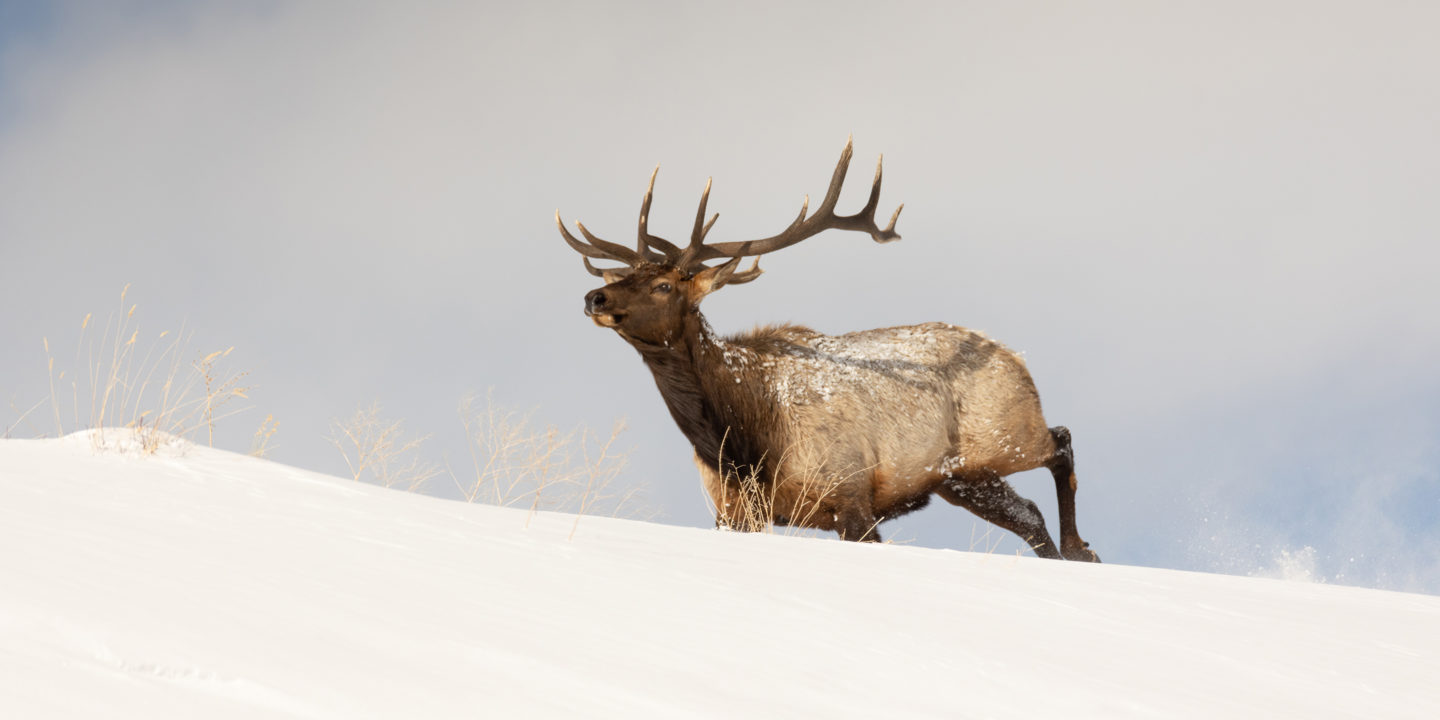
By late winter, elk often appear leaner as months of limited forage take their toll. The first signs of spring bring much needed relief. As snow melts and new grasses emerge, elk quickly replenish their energy reserves.
Spring is also the time when pregnant cows prepare to give birth. Calving season usually begins in late May or early June, after a long winter pregnancy. Cows seek secluded areas with good cover to deliver their calves, which are able to stand and walk within hours. These young animals rely on camouflage and their mother’s vigilance to survive the early weeks of life.
The timing of birthing calves allows the young elk to grow as strong as possible before the next winter, increasing their chances of survival through the season.


A Symbol of Wild Winter in the Tetons
Elk represent the strength and determination required to survive long seasons of cold and snow. Seeing a large winter herd spread across a white landscape is one of the most impressive wildlife sights in Jackson Hole. Their calls, movements, and presence bring life to the winter environment.
For visitors exploring Grand Teton and Yellowstone during the winter months, elk are a defining part of the experience. A charming sleigh ride on the National Elk Refuge gives you a perspective like no other, getting up close and personal with wild elk toughing it out in the mountain winter while cozying up under a blanket.

FAQs
How do elk stay warm during winter in Jackson Hole?
Elk grow a thick two layer winter coat that insulates their bodies and traps warm air. They also build up fat reserves in autumn and limit unnecessary movements to conserve energy.
Where are the best places to see elk in winter?
Elk concentrate in low elevation areas that offer easier access to food. Common wintering locations include the National Elk Refuge, sagebrush flats surrounding the Gros Ventre River, and open areas within Grand Teton National Park. Guided winter tours are an excellent way to view elk safely and responsibly.
What do elk eat in winter when fresh grass is not available?
Elk feed on dried grasses, sagebrush, and woody shrubs. Their digestive system allows them to extract nutrients from this lower quality forage until spring growth returns.
Are elk dangerous to people?
Elk can be unpredictable, especially during winter when energy levels are low. They may charge if they feel threatened. Visitors should always keep a safe distance and avoid approaching them. Viewing with a professional guide ensures a safe experience.
Why do elk migrate in winter?
Elk move to lower elevations in winter to take advantage of shallower snow, better forage, and safer travel conditions. Migration helps them conserve energy and improves their chances of surviving until spring.