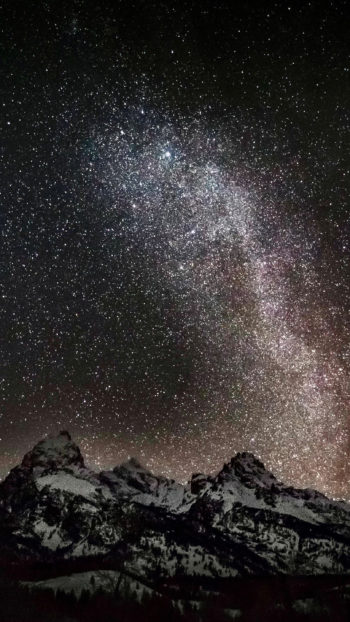
Stargazing in Jackson Hole offers access to some of the darkest and most pristine skies in the western United States. Surrounded by vast protected landscapes and far removed from major urban light sources, the region provides exceptional visibility of stars, planets, and the Milky Way. On clear nights, the sky reveals remarkable detail that is often invisible in more developed areas.
Guided stargazing experiences elevate this opportunity by combining astronomy with natural history and landscape interpretation. Rather than simply observing the night sky, guests gain insight into celestial movement, seasonal sky changes, and the relationship between darkness and the surrounding ecosystem.
For visitors to Jackson Hole, stargazing is not just an evening activity. It is an extension of the region’s wild character and a chance to experience the Greater Yellowstone Ecosystem from an entirely different perspective.


Why Jackson Hole Is One of the Best Places for Stargazing
Low Light Pollution
One of the most important factors for quality stargazing is the absence of artificial light. Jackson Hole benefits from limited development and strict land protections, which help preserve naturally dark skies. Even a short drive away from the town center significantly improves visibility, allowing faint stars and distant celestial features to become more apparent.
This level of darkness is increasingly rare and contributes to the region’s reputation as a premier destination for night sky observation.
High Elevation and Clear Air
Jackson Hole sits at a relatively high elevation, which reduces the amount of atmosphere between the observer and the stars. This thinner air often results in clearer, sharper visibility. Combined with dry conditions and minimal humidity, the sky appears more defined and stable compared to lower elevation environments.
These atmospheric conditions enhance the ability to distinguish constellations, observe planetary detail, and follow subtle movements across the night sky.
Proximity to Protected Lands
The surrounding protected landscapes, including Grand Teton National Park, provide expansive areas free from artificial light. These open environments create unobstructed views of the horizon, which are essential for observing constellations as they rise and set.
Protected lands also preserve natural darkness, which plays an important role in both astronomy and wildlife behavior. This connection between land conservation and dark sky preservation adds another layer of significance to stargazing in Jackson Hole.

Best Places for Stargazing in Jackson Hole
Grand Teton National Park
Grand Teton National Park offers some of the most reliable and accessible stargazing conditions in the region. Wide open landscapes, minimal artificial light, and dramatic mountain silhouettes create an ideal setting for night sky observation. The absence of visual obstructions allows for full sky visibility, which is especially valuable when tracking constellations or watching meteor activity.
Snake River Corridor
The Snake River corridor provides a quieter and more secluded stargazing environment. Calm surroundings and open skies make it an excellent location for uninterrupted viewing. Reflections along the water can add depth to the experience, especially on clear, still nights.
This area also offers a sense of solitude that enhances the overall atmosphere of stargazing.
Open Valley Areas
The broad valley floor surrounding Jackson Hole includes many locations with unobstructed views of the horizon. Moving away from artificial light sources is key, and even modest distance from town can significantly improve viewing conditions.
Open areas allow for full sky visibility, which is important when observing the movement of stars, planets, and satellites across large portions of the sky.


What You Can See While Stargazing in Jackson Hole
Stargazing in Jackson Hole offers a wide range of celestial observations depending on season, weather, and moon phase.
- The Milky Way is often visible as a dense band of stars stretching across the sky during summer months. Its structure and detail become especially clear under dark conditions.
- Constellations such as Orion, Ursa Major, and Cassiopeia shift throughout the year, offering different viewing opportunities with each season.
- Planets including Jupiter and Saturn can often be seen with the naked eye and appear brighter than surrounding stars.
- Meteor showers occur at predictable times of year and can produce frequent streaks of light across the sky.
- Satellites and space stations occasionally pass overhead, adding unexpected movement to the night sky.
Guided experiences help identify these features and explain their position, motion, and significance.

Best Time of Year for Stargazing in Jackson Hole
Seasonal changes influence both visibility and what can be observed in the night sky.
- Spring
- Transitional constellations begin to shift into view
- Evenings remain cool with relatively stable atmospheric conditions
- Less crowded conditions allow for quieter viewing
- Summer
- Peak visibility of the Milky Way
- Warmer nighttime temperatures improve comfort
- Longer twilight but excellent late night viewing
- Fall
- Crisp air improves clarity and contrast
- Fewer visitors create more secluded viewing opportunities
- Earlier darkness compared to summer
- Winter
- Early nightfall allows for convenient viewing times
- Cold air creates sharp visibility and high contrast
- Bright constellations dominate the winter sky
Clear skies and minimal moonlight often have the greatest impact on visibility regardless of season.


How to Prepare for Stargazing in Jackson Hole
Preparation can significantly improve both comfort and viewing quality.
- Dress in warm layers, as temperatures drop quickly after sunset even in summer.
- Bring a headlamp with a red light setting to preserve night vision.
- Avoid exposure to bright screens before and during stargazing.
- Use binoculars to enhance detail when observing stars and planets.
- Check weather forecasts and moon phases in advance to choose optimal viewing conditions.
Allowing time for your eyes to adjust to darkness will improve your ability to see faint stars and subtle details.

Why Choose a Guided Stargazing Experience
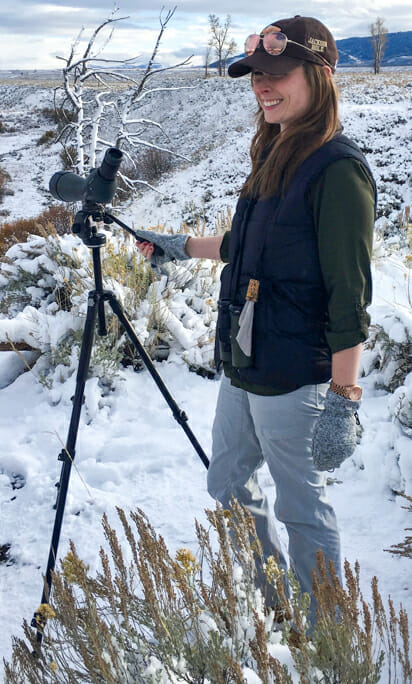
A guided stargazing experience provides more than access to dark skies. Naturalist guides help interpret the night sky by explaining constellations, planetary movement, and seasonal changes in celestial visibility. This transforms the experience from simple observation into a deeper understanding of the universe.
Guided tours also ensure that guests are positioned in optimal viewing locations while maintaining a quiet and respectful environment. Small group sizes allow for a more personal experience, and high quality optics can enhance visibility for those interested in more detailed observation.
Combine a sunset wildlife safari with an evening of stargazing in one tour to experience the park in one unforgettable night. In addition, guides often connect the night sky to the surrounding landscape, offering insight into how darkness influences wildlife behavior and ecosystem function.
FAQs
Where is the best place for stargazing in Jackson Hole?
Grand Teton National Park and areas away from town lights provide the best stargazing conditions due to low light pollution, open horizons, and protected landscapes.
What can you see while stargazing in Jackson Hole?
You can observe the Milky Way, constellations, planets, meteor showers, and satellites depending on the time of year and sky conditions.
When is the best time for stargazing in Jackson Hole?
Summer offers the best Milky Way visibility, while winter provides crisp air and early darkness. Clear skies and low moonlight improve viewing year round.
Are stargazing tours worth it in Jackson Hole?
Yes. Guided tours improve understanding of the night sky, help identify celestial objects, and provide access to optimal viewing locations.
Do I need special equipment for stargazing?
No. Many stars and constellations are visible to the naked eye, though binoculars or telescopes can enhance detail and overall experience.