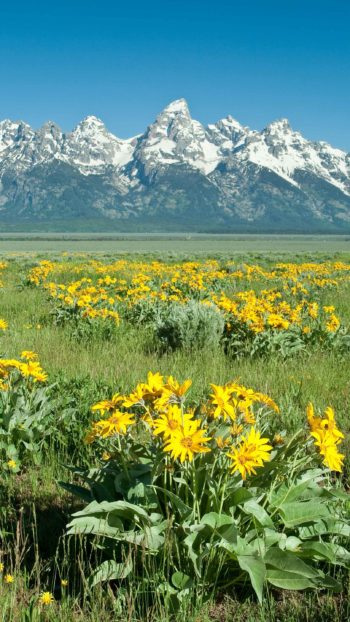
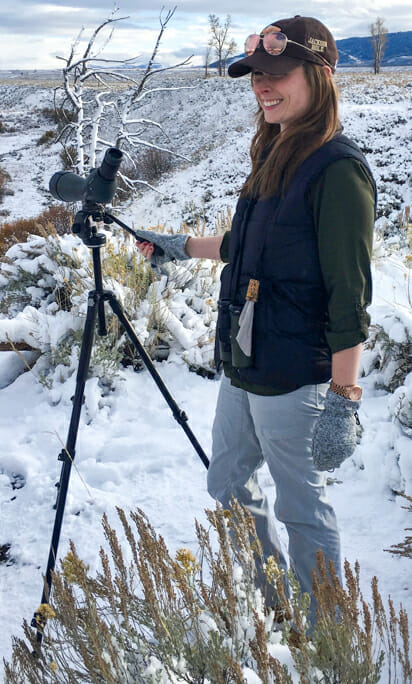
Departing directly from Jackson, Grand Teton tours provide seamless access to one of North America’s most intact ecosystems. Within minutes of leaving town, the landscape opens into expansive sagebrush valleys framed by the jagged Teton Range, where wildlife moves freely across protected habitat. Rather than navigating park roads, searching for pullouts, or second-guessing where animals may be active, guests are guided by professional naturalists who understand both the terrain and the rhythms of the ecosystem.
These tours are intentionally designed to maximize time in the field. Routes are adapted daily based on recent wildlife movement, weather conditions, and seasonal behavior patterns. With high-quality optics provided and a guide focused entirely on spotting and interpretation, guests are able to observe wildlife at safe, ethical distances while gaining a deeper understanding of the Greater Yellowstone Ecosystem. For visitors based in Jackson Hole, a guided Grand Teton tour is not simply transportation through the park. It is a structured, immersive experience built around wildlife, ecology, and place.

Why Take a Grand Teton Tour from Jackson Hole?
Jackson’s proximity to Grand Teton National Park is a significant advantage. The southern entrance lies just 15 minutes from town, allowing tours to reach key wildlife corridors early in the day when animal activity is at its peak. This timing is critical. Dawn and dusk are when predators move, herbivores feed, and the landscape is most dynamic.
A professionally guided safari removes the uncertainty that many visitors face. Wildlife in the Tetons is not randomly distributed; it follows patterns tied to habitat, seasonality, and pressure. Naturalist guides track these patterns daily, using both experience and real-time knowledge to position guests where sightings are most likely. Beyond simply locating animals, guides provide layered interpretation, explaining how species interact with their environment, how seasonal changes influence behavior, and how conservation efforts shape the landscape today.
The result is a more efficient and far more meaningful experience. Guests spend less time searching and more time observing, learning, and photographing.

What Wildlife Can You See?
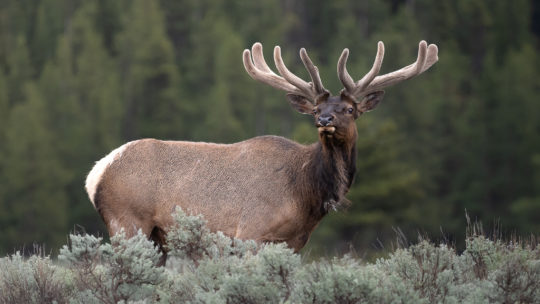
Grand Teton National Park supports a remarkable diversity of wildlife, and sightings often reflect both habitat and timing. Moose are among the most iconic and sought-after species, typically found in willow flats, wetlands, and riparian corridors where they browse on aquatic vegetation. Elk are widespread throughout the park, moving in herds across open meadows and transitioning seasonally between summer and winter ranges.
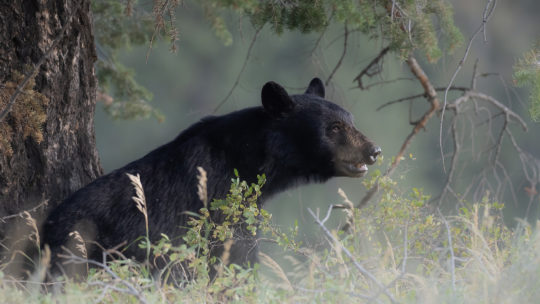
Bison, North America’s largest land mammal, are frequently encountered in valley bottoms and grasslands. Coyotes are common but often overlooked, patrolling sagebrush ecosystems with deliberate, efficient movement. Both black bears and grizzlies are residents within the park. Along rivers and lakes, bald eagles and osprey are regularly seen perched or hunting, particularly near the Snake River where fish populations support raptor activity.
Seasonality plays a defining role in wildlife visibility. Spring brings newborn animals and heightened predator activity. Fall introduces the elk rut, when bulls are vocal and highly active. Even within a single day, conditions shift. Early morning and late afternoon consistently provide the best opportunities, which is why tour timing is structured around these windows.


Half-Day vs Full-Day Grand Teton Tours
Choosing between a half-day and full-day tour depends largely on schedule, interest level, and how deeply guests want to explore the park.
Half-day tours are efficient and highly focused. They concentrate on wildlife-rich areas closest to Jackson, such as the southern portion of the park and key river corridors. These tours are ideal for travelers with limited time or those looking to complement other activities. Despite the shorter duration, they still provide strong wildlife viewing potential due to strategic timing and guide expertise.
Full-day safaris expand both distance and opportunity. With additional time, guides can cover a broader range of habitats, adjust routes dynamically, and incorporate more scenic and photographic stops. Locations such as Oxbow Bend, Schwabacher Landing, and northern park regions become accessible, each offering distinct perspectives and wildlife potential. The extended duration also allows for a more relaxed pace, deeper interpretation, and a higher probability of diverse sightings.
For guests seeking the most comprehensive experience, full-day tours consistently deliver greater depth and variety.

Best Time for Grand Teton Tours
Grand Teton National Park offers exceptional wildlife viewing across all seasons, with each period presenting distinct ecological highlights.
Spring is defined by renewal. Snow recedes from the valley floor, migratory birds return, and many species give birth. Wildlife is highly active as animals feed and recover from winter, making this a dynamic time for observation.
Summer provides full access to the park, with long daylight hours and a wide range of visible species. While wildlife can be more dispersed due to abundant resources, experienced guides continue to track movement patterns and locate key activity zones.
Fall is one of the most compelling seasons. The elk rut dominates the landscape, with bugling bulls competing for mates in open valleys. Cooler temperatures increase daytime wildlife activity, and the changing foliage adds visual depth to every scene.
Winter transforms the Tetons into a quieter, more concentrated wildlife environment. Snow limits movement, often bringing animals into more predictable areas. Bison, elk, and coyotes are commonly seen against a stark, snow-covered backdrop, offering a different but equally powerful experience.

How to Book Grand Teton Tours from Jackson Hole
Grand Teton tours are in high demand, particularly during the peak summer and early fall seasons. Availability can be limited, especially for small-group and private experiences, so booking in advance is strongly recommended.
Most tours depart early in the morning to align with peak wildlife activity. Selecting an early departure significantly improves the quality of the experience, both in terms of sightings and lighting conditions for photography. Guests are typically picked up directly from their accommodations in Jackson, simplifying logistics and ensuring a smooth start to the day.
When booking, consider group size, tour duration, and whether a private experience is preferred. Smaller groups often provide a more personalized experience, with greater flexibility and one-on-one interaction with the guide. Regardless of format, choosing a naturalist-led tour ensures that the experience is not only productive in terms of wildlife sightings, but also informative, ethical, and deeply connected to the landscape.
FAQs
What animals can you see on Grand Teton tours from Jackson Hole?
Common sightings include moose, elk, bison, black bears, coyotes, bald eagles, and other raptors depending on season and habitat conditions.
Are Grand Teton tours from Jackson Hole worth it?
Yes. Guided tours increase wildlife sighting success, provide expert ecological interpretation, and eliminate the stress of navigating the park independently.
How long are Grand Teton tours from Jackson Hole?
Tours typically range from half-day (4–5 hours) to full-day (8–9 hours) experiences, with private options offering flexible timing.
What is the best time for Grand Teton wildlife tours?
Spring and fall often provide the most active wildlife viewing, while summer offers full park access and winter provides dramatic snowy landscapes.
Should I book a private Grand Teton tour?
Private tours allow customized itineraries, flexible pacing, and enhanced photography opportunities, making them ideal for specialized wildlife interests.