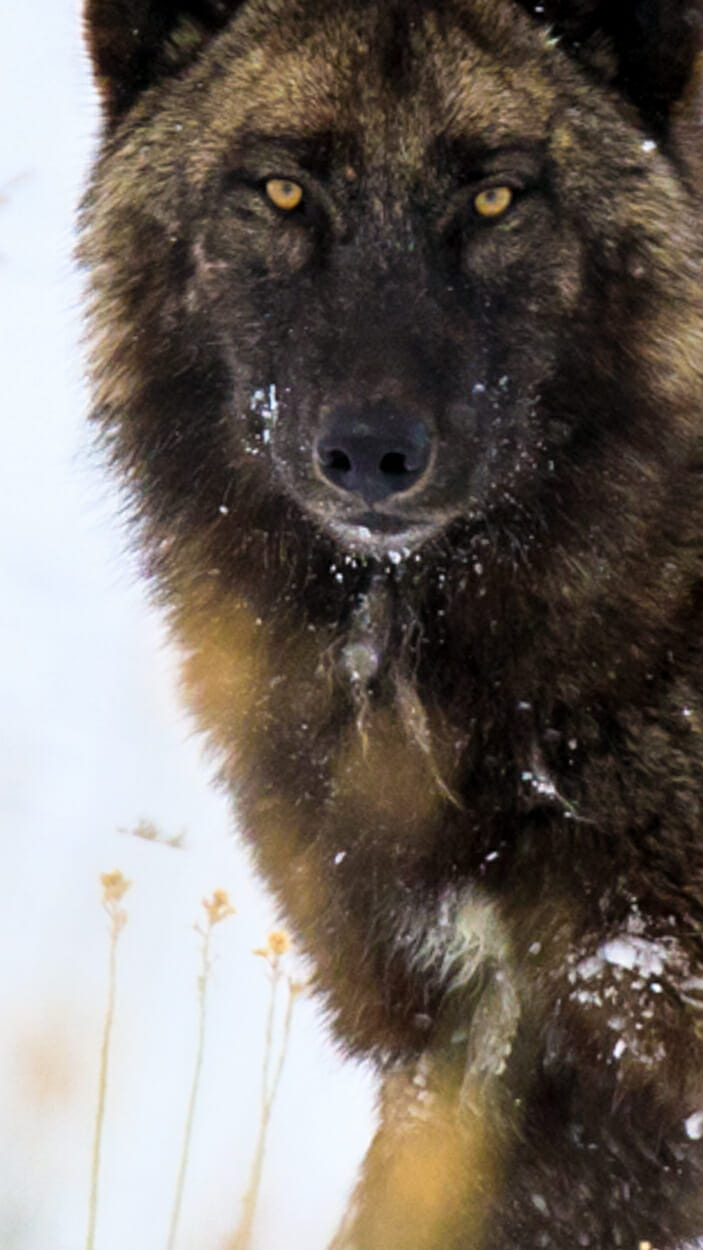
Wolves are experts at navigating northern landscapes of snow, cold, and long nights. These remarkable carnivores once roamed widely across the Northern Hemisphere and today are thriving once again in the mountains and valleys of the Greater Yellowstone Ecosystem.
Winter often reveals the real strength of wild wolves. Fresh tracks in the snow, distant howls carrying over frozen meadows, and glimpses of packs moving with purpose remind visitors that predators are always part of the story here. Guests traveling with Jackson Hole Wildlife Safaris may spot wolves traversing ridgelines or scanning for prey across vast open terrain.

Built for the Deep Cold
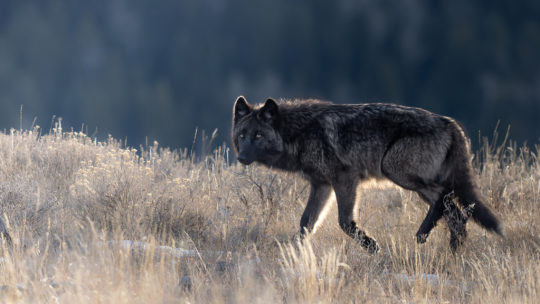
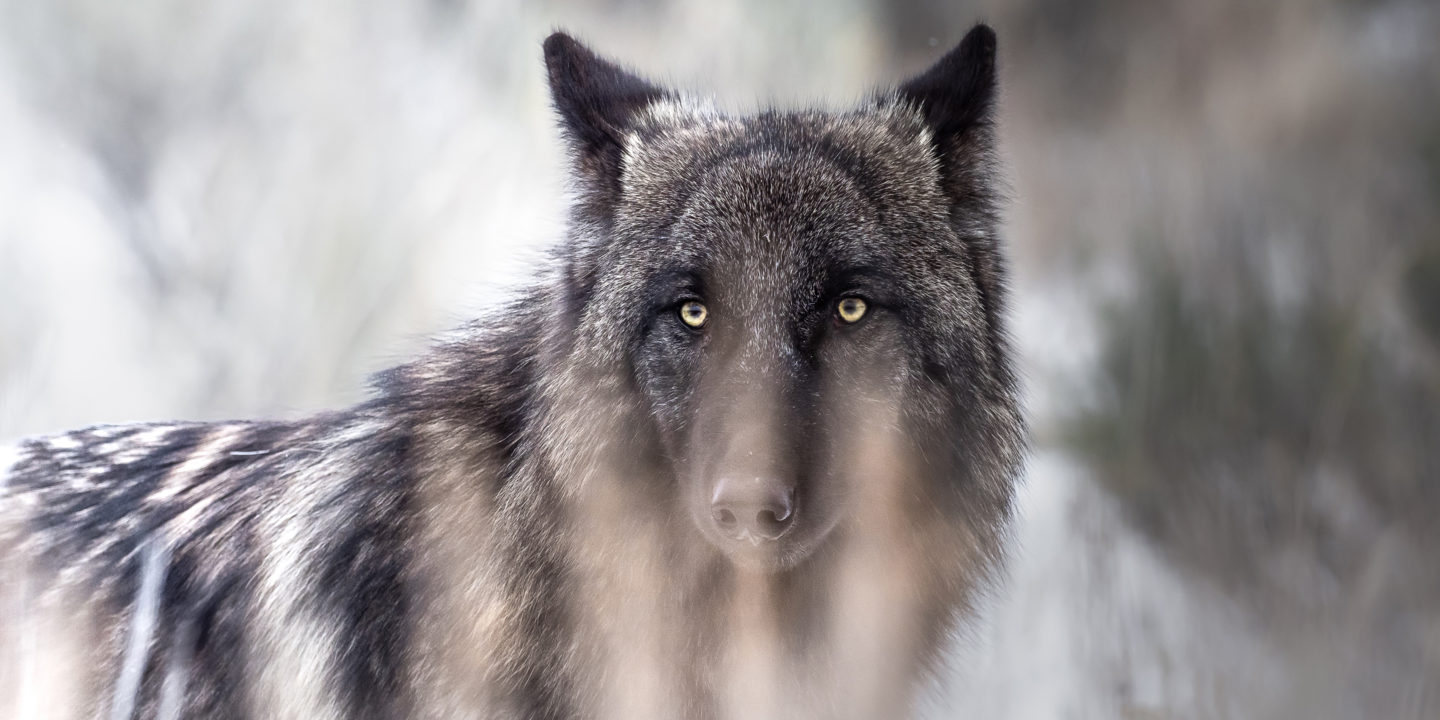
Wolves possess a set of physical adaptations that make them powerful winter survivors. Their thick double coat traps warm air close to the skin while the outer guard hairs block snow and wind. As temperatures drop, their coats become even more insulating, keeping them warm while traveling long distances in harsh weather.
Large paws spread their weight across the snow, functioning like natural snowshoes. Strong legs allow them to move efficiently through deep drifts while pursuing prey that struggles to escape. Wolves also maintain lean, muscular bodies that support fast bursts of speed and long chases.
Their sharp senses of smell and hearing help them detect prey hidden beneath snow or in wooded cover. In winter when food sources are scarce, every advantage counts.
Pack Power and Winter Survival
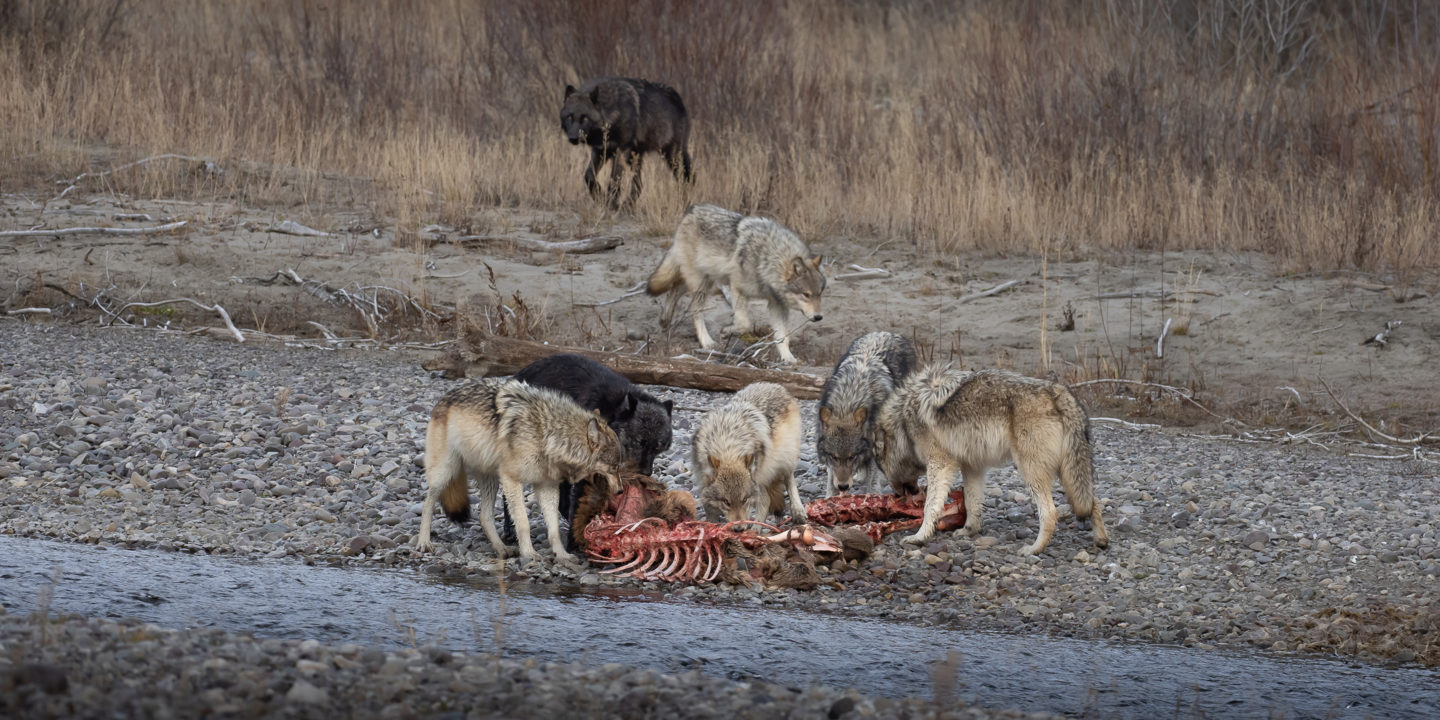
Wolves are highly social animals that depend on teamwork to survive. Living and hunting as a pack provides crucial benefits during winter. Cooperative hunting allows wolves to target large prey such as elk, deer, and bison. Packs can surround and weaken prey that would be impossible to take down alone.
Winter also strengthens social bonds. Wolves communicate constantly with body posture, facial expression, scent marking, and howling. Each pack member contributes to the group from experienced leaders to growing pups born the previous spring.
Territorial boundaries become especially important in winter as packs defend limited food resources. Howling serves as a clear announcement to neighboring wolves to stay away.


A Season of Strategy
Deep snow makes large prey vulnerable and creates opportunities, but winter is still a demanding season for wolves. Hunts require tremendous energy and success often comes only after long chases and coordinated efforts.
To conserve energy, wolves use well traveled routes along ridges, frozen rivers, or compacted snow. They rest frequently between hunts and rely on stored fat and occasional scavenging when hunting conditions are difficult.
In the Greater Yellowstone Ecosystem, wolves commonly follow migrating elk herds to lower elevation valleys. This seasonal pattern brings predator and prey into close contact across the valley floors of Jackson Hole and the river corridors of Yellowstone.

Renewal as Winter Fades
By late winter, packs look forward to the promise of spring. Warmer weather improves access to prey and hunting success often increases. Spring also brings the denning season. Pregnant females select secluded burrows or rock shelters to give birth to new pups, usually in April.
These young pups rely completely on the adults for food and protection. The entire pack participates in raising them, delivering meat and teaching essential behaviors that support the next generation of hunters.
The cycle continues year after year with winter survival shaping stronger, smarter, and more cohesive wolf packs.


A Living Symbol of Wild Winter
Seeing wolves in the wild leaves a lasting impression. Their presence reminds us that these parks are home to powerful ecological relationships that continue through the quietest months of the year.
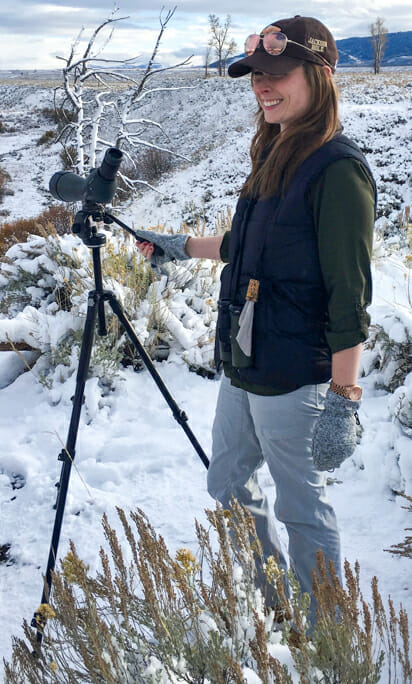
For visitors exploring Grand Teton and Yellowstone in winter, spotting wolves is often a highlight of the trip. Whether viewed from a distance through spotting scopes or heard through the frosty air at first light, wolves bring unparalleled excitement to the winter landscape.
Jackson Hole Wildlife Safaris offers the opportunity to experience wolves responsibly with expert naturalist guides who help you observe this remarkable species while minimizing disturbance to their daily lives.
FAQs
How do wolves stay warm in the winter months?
Their dense double coat provides exceptional insulation while strong muscles generate body heat during travel. Wolves are naturally adapted to live comfortably in cold climates.
Where are the best places to see wolves in winter?
Prime locations include the Northern Range of Yellowstone such as Lamar Valley and areas near Slough Creek. Guided wildlife tours greatly improve the chance of sightings since guides monitor wolf pack movements daily.
What do wolves eat during winter?
Wolves primarily hunt large ungulates including elk, deer, and bison. They may also scavenge or take smaller mammals when necessary.
Are wolves dangerous to humans?
Wolves avoid people and incidents involving humans are extremely rare. Maintaining respectful distance and observing with professionals ensures safe and ethical viewing experiences.
Do wolves migrate in the winter?
Wolves do not migrate, but they move about their territories based on prey availability. Many packs shift to lower elevations in winter as elk and other prey move into accessible areas.